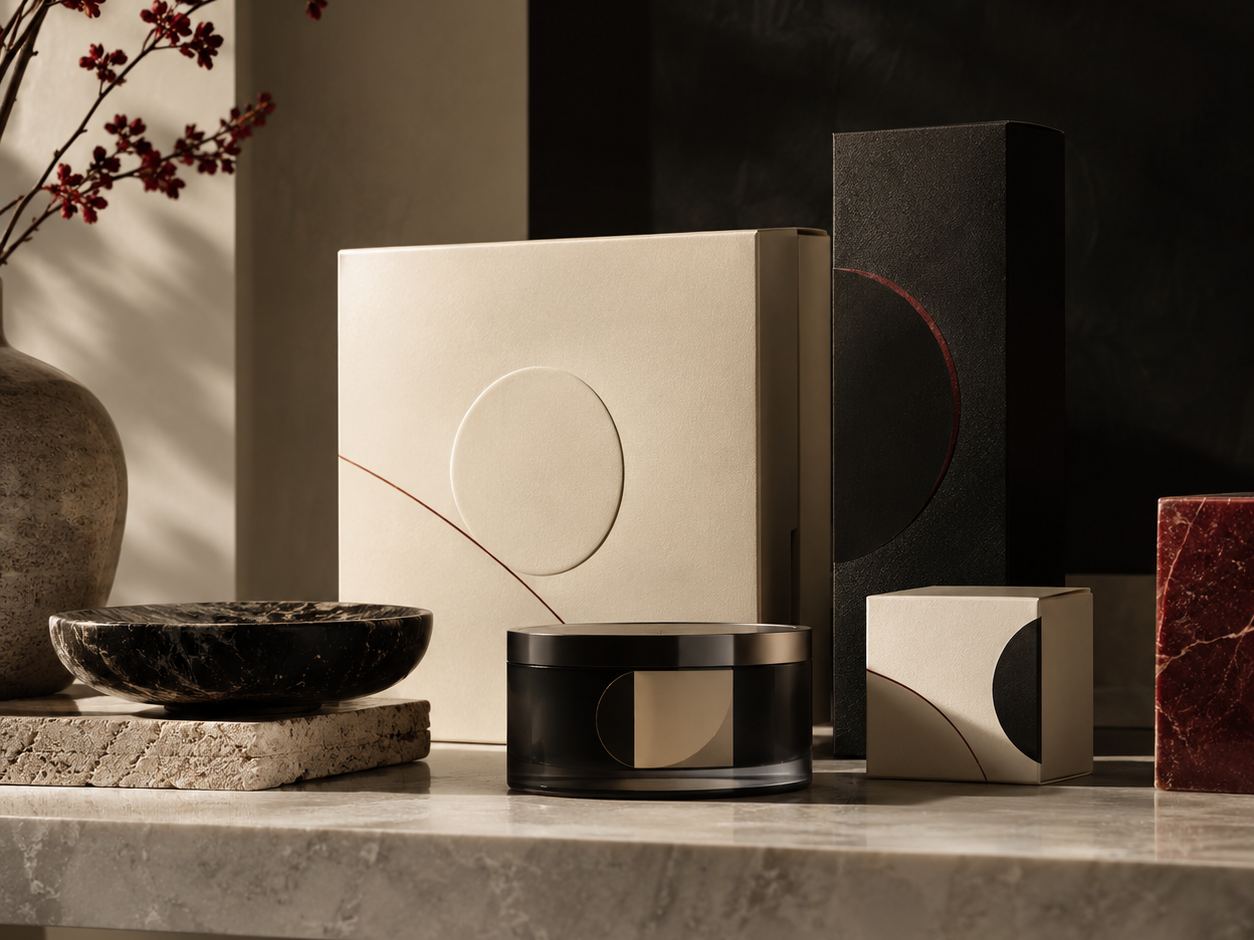
A private label is the step where an importer stops selling someone else's product and starts selling one of their own. From the outside it looks like swapping a logo; in practice it is a decision that changes the price, the minimum quantity, the timeline and how much of the product you are answerable for. This guide goes through what is actually required, in the order things happen.
Four levels of branding, and you need not start at the deepest
The common mistake is to think a private label is one thing. It is a spectrum, and every step along it is more expensive and more binding than the one before.
- Your logo on the packaging. The product stays a catalogue product, only the packaging is yours. The cheapest and fastest, and usually the right place to start.
- Your logo on the product. Printing, engraving or embossing on the product itself. Slightly more expensive and it raises the minimum quantity.
- A change to the existing product. A different colour, a different material, a small change of shape. Here you are into setup costs at the factory.
- A dedicated product. Developing a product that does not exist in the catalogue, usually with a new production mould. The initial cost is high and it is spread over the quantity.
What has to be ready before you approach a factory
A factory cannot start work on a private label before you have made decisions. The more prepared you arrive, the more precise the quote you get and the fewer rounds you spend.
- The brand name, and a basic check that it is free to use in your category.
- A logo as a vector file, not as an image. A factory given an image will give you a blurred result.
- Colours as an agreed colour code, not as they look on a screen.
- A decision on the type of packaging: box, pouch, jar, and what material.
- The text that will appear: product name, description, instructions, warnings.
- The quantity you actually intend to order — it changes the whole quote.
What happens to the minimum quantity
This is the biggest surprise for anyone starting out. A factory that sells a catalogue product in a small quantity will demand a far larger quantity for a private label, because it has to stop a line, change the print and run a dedicated batch. The deeper the change, the higher the minimum goes.
There are a few ways around it: start with shallower branding, find a small factory whose model is a low minimum, or order the product as a catalogue item and brand only the outer packaging — which can sometimes be produced in a small quantity by another supplier.
Packaging is not only design
The part most importers underrate. Attractive packaging that does not survive transport, or does not fit the dimensions a retailer demands, is an expensive problem that surfaces late.
- Durability in transport: a drop test and a stacking test, not just how it looks on the table.
- Dimensions that suit the shelf the product is intended for.
- Volume efficiency: how many units fit in a carton, and how many cartons in a container. This affects freight cost directly.
- A barcode that actually reads on a scanner, not one that merely looks right.
- Hebrew marking as required for the product — the importer's responsibility.
Printing: the colour on the screen is not the colour on the carton
One of the basic differences between digital design and print is that a screen emits light and paper reflects it. A colour that looks deep on a screen can come out dull in print, especially on uncoated board.
The only way to know is to order a printed packaging sample from the factory that will do the printing, and approve it physically. It adds a round to the timeline, and it saves a whole order that arrived in the wrong shade.
What stays yours
A point worth settling in the agreement in advance: the design files, the moulds and the assets created for you are yours. The practical meaning is that if you decide to move to another factory, you take the packaging and the product with you and do not start from scratch.
With a production mould this matters particularly. If you paid for the mould, write into the agreement that it is yours and that it can be transferred. Factories will not always be delighted, but it is an accepted demand.
The order that works
- Establish with the factory what can be changed at all, and what each level of branding does to the price and the minimum.
- Decide on the level of branding according to the quantity you are genuinely prepared to order.
- Prepare the assets: name, vector logo, colours, texts.
- Design the packaging against the factory's technical constraints, not ahead of them.
- Order a printed packaging sample and approve it physically.
- Produce, and inspect the packaging as well as the product.
Further reading
Check how much branding is realistic at your quantity
Tell us which product and at what quantity. We will tell you which level of branding that is enough for, and what it does to the price and the timeline.