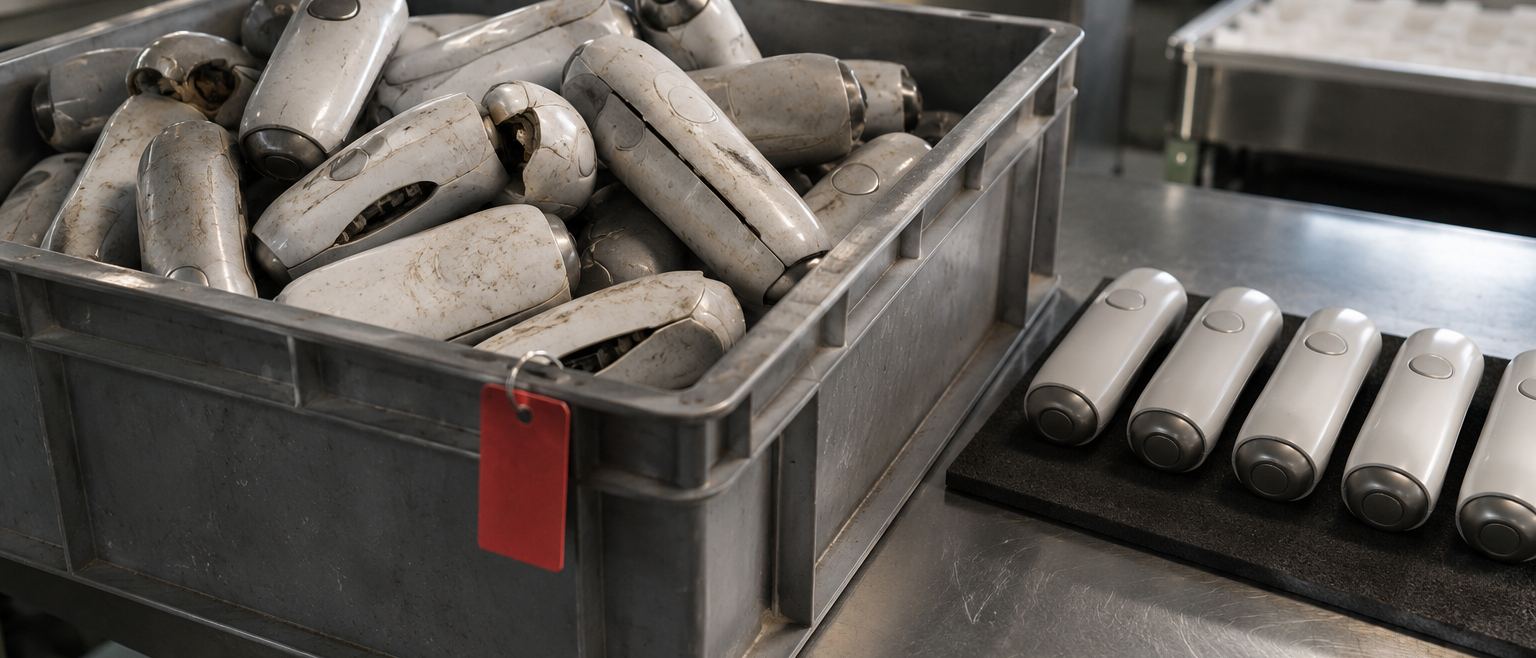
Who this is for
Quality control is not one stage at the end but three different checkpoints, and not every import needs all three.
Before you order — the sample stage
The sample is the standard the whole order will be measured against. If it was never measured and never approved in writing, there is nothing to compare the delivered goods to.
During production
An inspection while the line is running catches a deviation while it can still be corrected. Once the whole order has been made, every correction costs far more.
Before the container is sealed
This is the last point at which goods can still be refused. Once they are at sea, the negotiation is a different one entirely.
After you have already been burned
An order arrived with defects and you want the next one to be different. Here we start by analysing what exactly failed, and build the inspection around that.
What the service includes
The depth of inspection is set by the product, the quantity and the risk — not every product justifies the same level of checking.
- Defining the quality standard in writing: what counts as a critical defect, a major defect and a minor one.
- Running the rounds of samples with the factory until there is a sample you approve.
- Keeping a signed approved sample, which is the reference point for any later dispute.
- An inspection during production, when part of the order has been made and part has not.
- A pre-shipment inspection on a representative sample drawn from the order, against the specification and the approved sample.
- Checking the packaging itself: marking, carton dimensions, resistance to transport and shelf requirements.
- An inspection report with photographs, findings and a clear recommendation — release, rework or stop.
- Handling whatever was found with the factory, including rework, replacement or a credit.
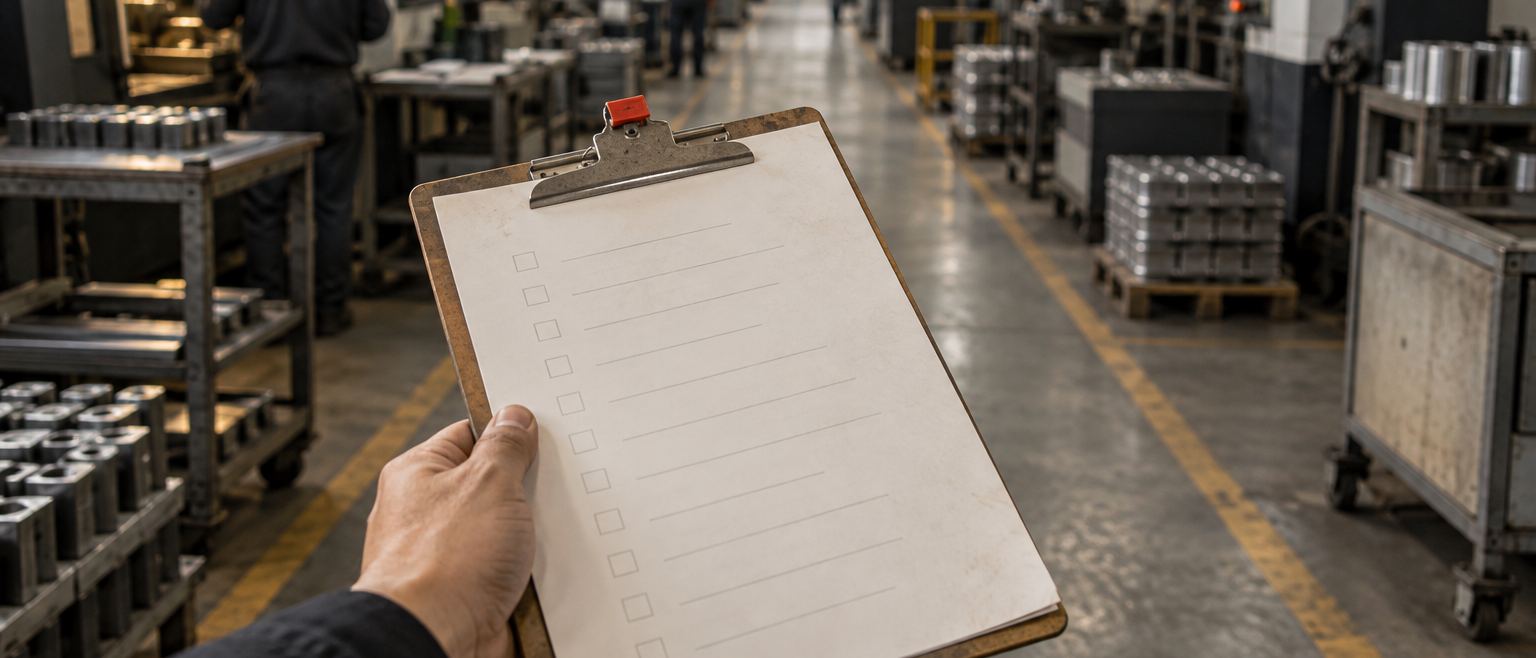
How it works, step by step
An inspection only works if it was defined before production started. An inspection defined after the goods are finished is an argument, not an inspection.
- 01
Setting the standard
We write down what is measured, with which instruments, and the tolerance on every parameter. Whatever is not written here will not be checked later.
- 02
Rounds of samples
We order a sample, measure it against the specification, and send the factory a list of corrections. We repeat until it matches.
- 03
Sample approval
The sample you approve is signed and kept. From that point it is the standard — not the correspondence and not the promises.
- 04
Inspection during production
We go into the line while part of the order is being made. A deviation caught here can still be fixed inside the same order.
- 05
Pre-shipment inspection
We check a representative sample from the packed order, including the cartons themselves.
- 06
Decision
A reasoned decision is made: release, rework or stop. The decision is yours, taken against findings rather than a feeling.
What you end up holding
Every inspection ends in a document, because a document is what you can put in front of the factory.
- A quality standard document, written and agreed with the factory in advance.
- A signed approved sample, kept as the reference.
- An inspection report with photographs and measurements, not only a written summary.
- A list of findings by severity, with a recommendation on each one.
- A record of the correspondence with the factory on correcting the findings.
- A release approval, or a written reason for stopping.
Questions about this service
No, and nobody can. What quality control does is reduce the probability of a problem, catch it as early as possible, and leave you holding documentation you can demand a correction or a credit against.
Partly. Samples can be shipped and measured, photographs can be requested and rounds can be run remotely. What a remote inspection does not give you is what you see on the line itself — order, equipment, working conditions, and what happens to units that were rejected.
Rather than opening the whole order, a number of units are checked, selected by an accepted sampling method. The number of units follows from the order size and the risk level, and it is fixed in advance rather than by what is convenient on the day.
It depends on the severity. A minor defect in a small quantity can sometimes be accepted against a discount. A major defect sends the order back for sorting or rework at the factory. A critical defect stops the shipment. The decision is yours, taken against the findings.
Yes. It is a standalone entry point and there is no need for us to accompany the whole process. In that case we will ask to see the specification and the approved sample, because without them there is nothing to inspect against.
Check it before the container is sealed
Tell us which product is being made, in what quantity and when production is due to finish. We will tell you which checkpoints are relevant in your case and which of them are unnecessary.
Related services