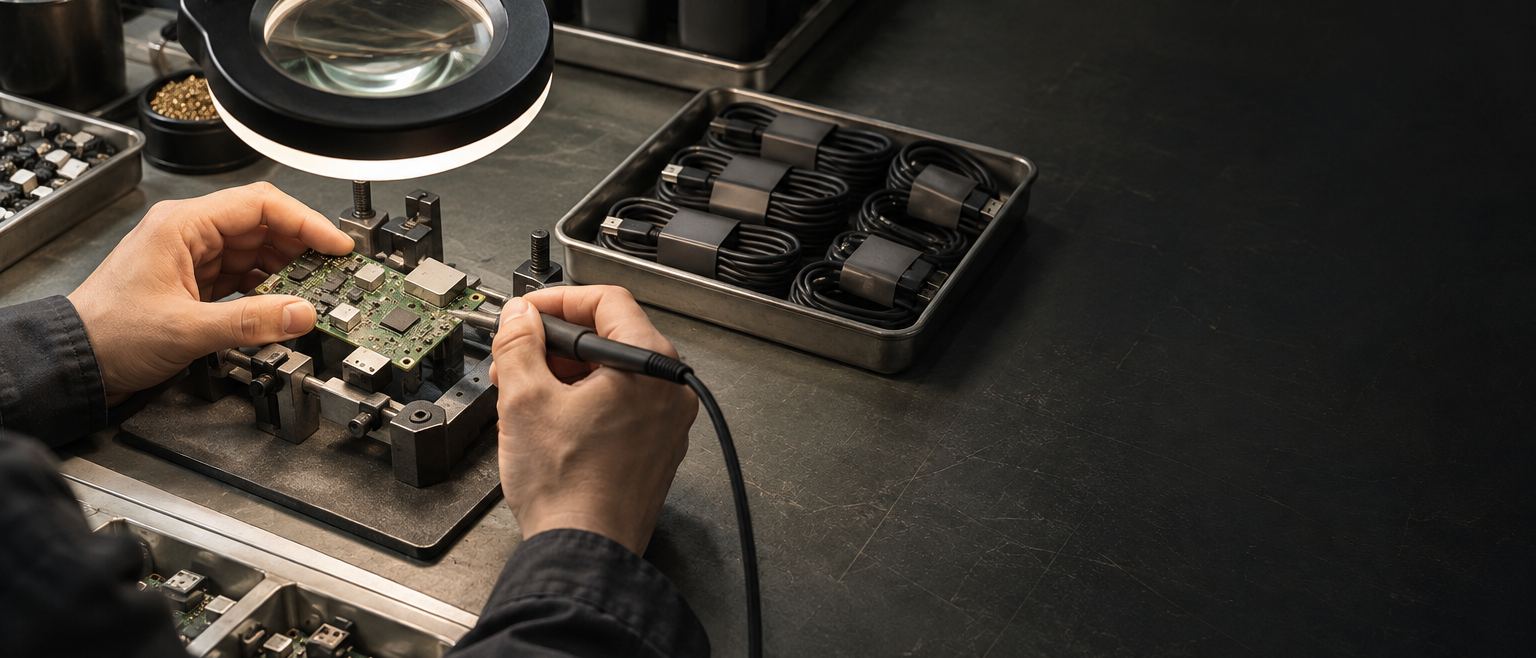
In electronics, compliance is not a formality to be tidied up at the end — it is a condition of entry. A product that does not meet the requirements simply does not come in, and all the other work is wasted.
It is also the industry where the gap between a product that looks identical and a product that really is identical is the widest, because most of the difference is hidden inside the casing.
What makes importing in this industry different
Four things that make this industry its own case.
Standards and safety come first
An electrical product is subject to safety requirements and sometimes to an official Israeli standard. Before ordering, you need to know which category the product belongs to and what is required. The binding authority is the Standards Institution of Israel and the regulators, not the factory.
Batteries change the whole shipment
A product containing a lithium battery is subject to special transport rules and sometimes to additional documentation. That affects the shipping route, the price, and what can be sent by air at all.
What is inside does not show on the outside
Two products can look identical and contain completely different components. Downgrading an internal component is the most common way a factory lowers a price without saying so.
Product generations turn over quickly
An electronic product dates fast, so an order that is too large carries the risk that the stock becomes a previous generation before it sells.
What gets checked at the factory in this industry
Inspection in electronics is mostly an inspection of what cannot be seen.
- Compliance and safety-test documentation from the factory, and verification that it refers to the model you are ordering.
- The component list, and above all changes to it between the sample and actual production.
- A functional test on a representative sample — not just switching it on, but use as the user will use it.
- Electrical safety: insulation, connections, heating under load.
- Batteries: type, declared capacity against measured capacity, and the transport documentation required.
- Assembly quality — soldering, connections and how the casing closes.
- Compatibility with the Israeli mains supply, including plug and voltage.
- Operating instructions and warnings in Hebrew, and the marking required on the product itself.
How we start
In this industry the first step is always a regulatory check, even when it looks unnecessary.
- 01
Classifying the product
We establish which regulatory category the product falls into and what is required to import it. Sometimes that is short, and sometimes it changes whether the project is worth doing.
- 02
Writing a technical specification
The specification is written at component level, not at description level. "A strong battery" is not a specification.
- 03
Finding a factory with documentation
We look for a manufacturer that can show tests and documentation, not only state that the product complies.
- 04
Sample and inspection
We check a sample against the specification, including opening it and examining what is inside.
- 05
Production under inspection
We inspect during production and before shipping, with particular attention to component changes that were not agreed.
The services that touch this industry
Find out what is required before you order
Tell us which electrical product, whether it contains a battery, and what it is used for. We will tell you what is worth clarifying before you go further.