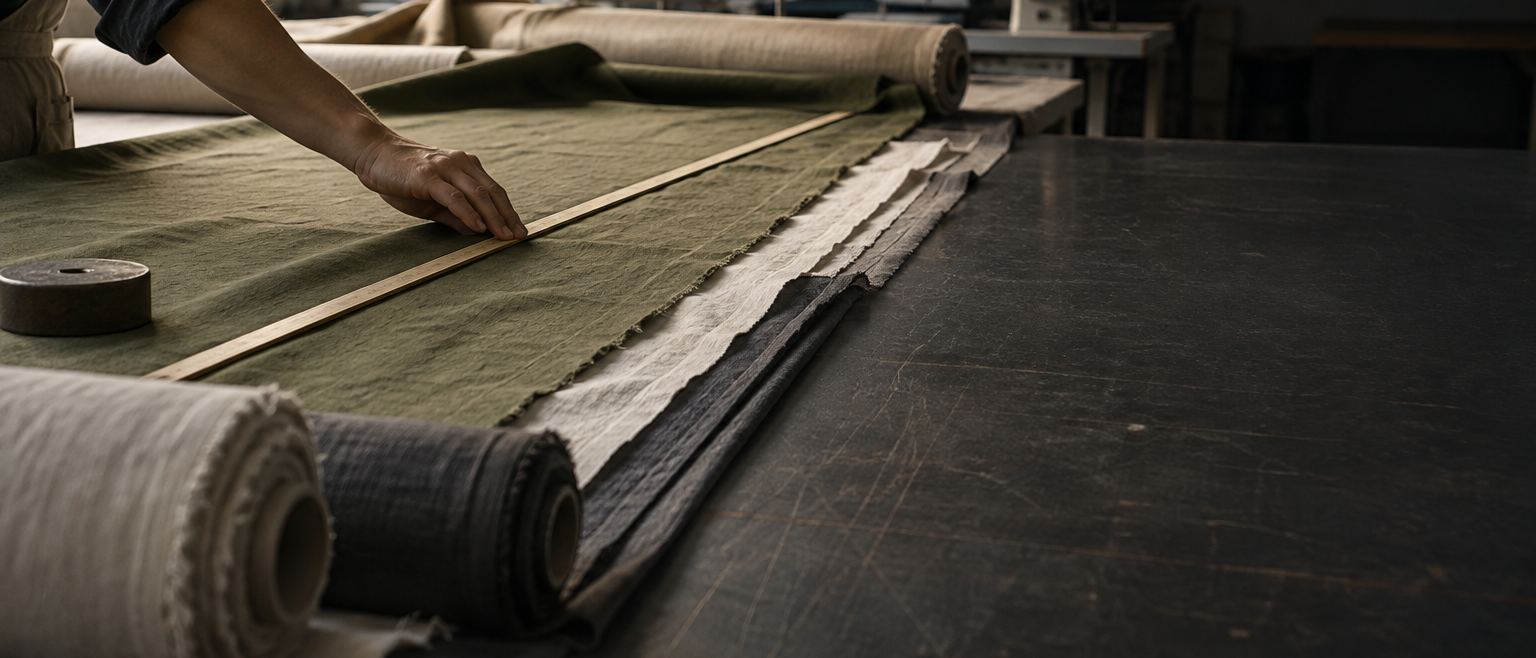
In textiles three things decide whether an order succeeds: the fabric, the sizing and the season. When one of them is off, the stock stays on the shelf even if everything else was perfect.
It is also the industry where the gap between a sample and production is widest, because fabric is a material that varies from batch to batch.
What makes importing in this industry different
Four things that set textile importing apart.
Fabric is not constant between batches
Exactly the same fabric, from two different dye lots, can come out in a different shade. So in textiles the fabric itself is approved, and not only the finished garment.
Sizing is a commercial decision
A size chart taken from the factory as it comes usually does not suit the Israeli market. Adapting the size chart is what brings returns down.
Seasons are unforgiving
A winter item that arrives in February sells at a discount. In textiles the timetable is not a convenience, it is part of the pricing.
Labelling and composition have to be exact
Fabric composition, care instructions and country of manufacture have to appear on the label. An incorrect label is a regulatory problem, not just a cosmetic one.

What gets checked at the factory in this industry
Inspection in textiles splits in two: checking the fabric, and checking the sewing.
- Actual fabric composition against the declared composition.
- Fabric weight per metre — the quietest way to cut cost is to take weight out of it.
- Colour fastness: washing, rubbing, perspiration and light.
- Shrinkage after washing, and a check that the size holds.
- Conformity to the approved size chart, on a sample from every size and not only from one.
- Sewing quality: seams, finishes, zips and buttons.
- Shade consistency within the batch and between cartons.
- Labels: composition, care instructions, size and country of manufacture — present, correct, and surviving a wash.
How we start
In textiles the planning starts from the season and works backwards.
- 01
Planning around the season
We fix the date the goods have to be in the country, and work backwards from there to the order date.
- 02
Choosing the fabric
The fabric is approved before the garment is. This is the stage that saves most of the surprises later on.
- 03
The size chart
We adapt the sizing to the target market rather than accepting the factory's chart as the default.
- 04
A production sample
We ask for a sample made from the actual fabric and on the line the order will run on, not a showroom sample.
- 05
Production and inspection
We inspect during production and before shipping, with particular attention to shade consistency and to sizing.
The services that touch this industry
Plan a textile order
Tell us which item, for which season and in what quantity. We will tell you when the order has to be placed to make it, and what is worth approving before anything else.